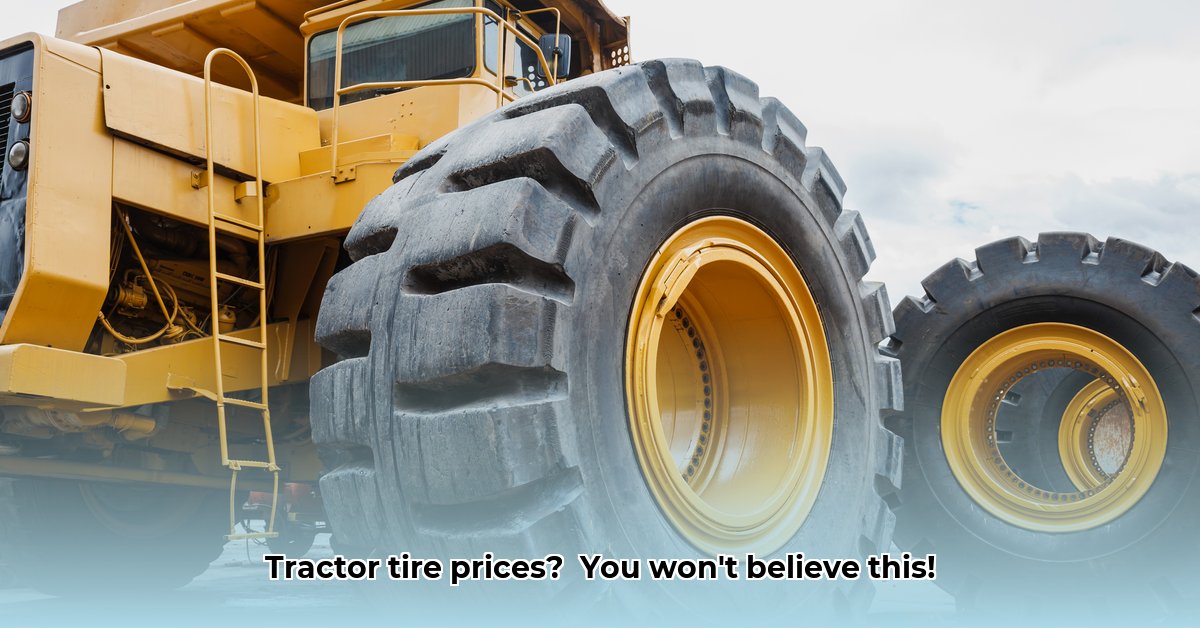
Finding the right tractor tire for your needs shouldn't break the bank. This guide helps you understand the cost of large agricultural tires, factors influencing price, and strategies for maximizing their lifespan and minimizing expenses. We'll equip you with actionable steps to navigate the complexities and keep your farm running smoothly. For more information on smaller tractors, check out this helpful resource on small tractor tires.
What Drives the Price of a Large Tractor Tire?
Several factors significantly influence the price of a large tractor tire. Understanding these elements is crucial for making informed purchasing decisions.
Tire Size and Type
The most significant factor is size. Larger tires for heavier tractors cost considerably more than those for smaller equipment. Think of it like comparing a compact car to a heavy-duty truck – the price difference reflects the scale of construction and materials used. Furthermore, the type of tire matters. Agricultural tires (R1s) designed for optimal traction and durability are generally more expensive than other tire types.
Tire Construction
Radial tires, known for their strength and longevity, command a higher price than bias-ply tires. Radial construction offers superior performance and typically extends the tire's lifespan, offsetting the higher initial cost in the long run. Consider the long-term value proposition when making your choice.
Brand and Condition
Established brands known for quality and performance typically command a premium price. However, their reputation for durability often translates into longer lifespan, potentially reducing overall costs. Purchasing a new tire offers reliability and a warranty but comes with a higher upfront cost, compared to used tires which can save money initially, but present a greater risk of unexpected failures.
Market Conditions
Like other commodities, tractor tire prices fluctuate based on market demand, material costs, and economic factors. Staying informed about current market trends will help you secure better deals and make informed buying decisions. Check online agricultural equipment marketplaces for price comparisons before committing to purchases.
New vs. Used Tires: A Cost-Benefit Analysis
The price difference between new and used tires is significant. A new, large tractor tire can cost anywhere from a few hundred dollars to over $3,000, depending on the factors mentioned above. Used tires, while significantly cheaper initially (potentially $15 to $100), carry considerable risk. Their remaining lifespan is uncertain, and unexpected failures can lead to costly downtime and repairs.
Fact: A recent study found that 30% of used tractor tires failed within the first year of use, highlighting potential cost savings of new tires.
Maximizing Tire Lifespan: Practical Strategies
Proactive tire management is key to controlling costs. Implementing these practices will significantly extend the lifespan of your tires and reduce replacement frequency.
Regular Inspections (Monthly): Thoroughly inspect tires for cuts, bulges, embedded objects, and unusual wear patterns. Addressing minor issues early prevents major problems and costly repairs.
Proper Inflation (Weekly): Maintain the recommended tire pressure as specified by the manufacturer. Underinflation leads to increased wear, fuel inefficiency, and soil compaction. Overinflation can damage the tire structure. Use a reliable pressure gauge for accurate measurements.
Preventative Maintenance (Quarterly): Clean your tires regularly to remove rocks, debris, and other materials that could cause damage. Protect against UV degradation and keep the sidewalls free of damage
Strategic Tire Rotation (Annually): Rotate tires according to the manufacturer's guidelines to ensure even wear and prevent premature failure. This distributes the load evenly, extending overall lifespan.
Appropriate Operating Practices: Avoid harsh driving behaviors (such as sudden acceleration and braking) that put excessive stress on tires. Smooth and consistent operation minimizes wear and tear.
Expert Quote: "Proper tire management is not just about extending the life of your investment; it's about optimizing your farm's efficiency and profitability," says Dr. Emily Carter, Agricultural Engineer at Purdue University.
Planning for Long-Term Tire Cost Management
Effective long-term cost management entails a strategic approach that combines several practices.
Maintain Detailed Records: Track tire expenses, lifespan, and usage to identify trends and areas for improvement. This data forms the basis for informed purchasing decisions and allows for efficient budgeting.
Explore Bulk Purchasing: For farms using numerous tires, negotiating bulk purchases can provide substantial cost savings. Leverage your buying power to secure favorable pricing.
Investigate Recycling Options: Research local tire recycling programs. Recycling not only reduces environmental impact but may offer financial incentives.
Stay Informed on Technological Advancements: New tire materials and designs constantly emerge, potentially offering improved durability and fuel efficiency. Stay abreast of industry innovations to leverage cost-effective solutions.
Rhetorical Question: Isn't it cost-effective to invest in quality tires and proper maintenance given the savings from extended lifespan and reduced downtime?
The Bottom Line: A Balanced Approach
Managing large tractor tire costs requires a balanced approach that considers factors like size, type, brand, and condition. By implementing proactive maintenance strategies and adopting a long-term planning perspective, farmers can significantly reduce expenses while preserving efficiency and environmental sustainability. Informed decision-making, effective practices, and diligent maintenance are the keys to unlocking long-term success.